Floor scrubber pads vs brushes: which does your floor need?
Short answer
Use pads on smooth, finished floors such as sealed VCT, and brushes on textured, grouted, uneven or bare concrete floors, where bristles reach low spots. On a FactoryCat scrubber, the disk deck takes either, the orbital deck takes pads, and the cylindrical deck takes brushes only, in five of the nine options FactoryCat lists. Rougher grades clean harder but wear the finish and load the motor more.
What is the difference between a scrub pad and a scrub brush?
A pad is a flat layer of fibre. On a disk deck it is round and spins. On the orbital deck it sits flat on a metal-backed pad holder. On a smooth floor, its whole face scrubs at once.
A brush has bristles set in a solid block. The bristles bend into grout lines, texture and dips that a flat pad rides over. A brush costs more than a pad, but it lasts longer.
Brushes come in two kinds. Fibre brushes scrub with the bristles alone, and FactoryCat offers three: nylon, polypropylene and tampico. Grit brushes have abrasive in the bristles, so they cut as well as scrub. FactoryCat offers four grit grades.
FactoryCat's own disk deck text draws the same line: "For flat, smooth, finished floors, a pad holder and disposable floor scrubber pads can be used. For textured and uneven floors, you can choose from a wide variety of scrub brush fibers and grits."
Which floors need a pad?
Smooth, flat, sealed or finished floors, with finished VCT the most common case. A gentle pad keeps even contact and cleans without cutting the finish. On a FactoryCat disk deck, it goes on the red tufted pad driver, which takes a variety of pads. Keep grit brushes off finished floors, because they cut into the finish.
On VCT, match the pad to the job. Use a gentle pad for routine scrubbing, a rougher one to take off worn top coats before a recoat, and a stripping pad only to take the finish off. FactoryCat lists VCT prep and recoat as an orbital deck job, and six FactoryCat scrubbers take that deck.
Sealed concrete is a finished floor, so treat it like VCT. Polished concrete is often kept up with diamond pads, and a grit brush can dull its shine. FactoryCat also lists a black neoprene pad driver for diamond pucks. Ask your dealer if it suits your floor.
Coated floors, such as epoxy or urethane, are finished floors too. Use a gentle pad or a soft brush, and follow the coating maker's care guide. On a non-slip coating, use a fibre brush, and move to grit only if the coating maker allows it. Grit can wear the coating and its grip.
Which floors need a brush?
Textured and non-slip tile. A pad rides on the high points and shreds fast, while a brush reaches the low spots too. Start with a fibre brush, such as nylon or polypropylene. If soil stays behind, move up one grit grade at a time: Light Grit, then Midi Grit, then Tough Grit.
Grouted tile. Dirt sits down in the grout lines, where bristles reach and a pad bridges over. FactoryCat lists tile and grout cleaning as a cylindrical deck strength, and a brush on a disk deck works too.
Bare concrete. FactoryCat names concrete as a floor for its cylindrical deck, which takes brushes only and comes on six models. For ground-in soil, step up to a grit brush. Super Grit, the roughest, comes on the disk deck only.
Uneven or wavy floors. FactoryCat's disk deck has a gimbaled mount, so a brush can tilt to follow dips. A pad needs a flat floor.
Which FactoryCat decks take pads, and which take brushes?
The deck decides what you can fit. The disk deck takes both: brushes, or pads through a pad driver. The cylindrical deck takes brushes only. The orbital deck takes pads.
FactoryCat's brush and pad chart lists nine options. Four are for the disk deck only: the polypropylene brush, both pad drivers and the Super Grit brush. The other five also come as cylindrical brushes: nylon, tampico, Tough Grit, Midi Grit and Light Grit.
On mixed floors, the disk deck lets one machine switch between a brush and a pad. FactoryCat also lists it for "Lowest Maintenance Cost".
Sometimes the answer is a different deck, not a new pad or brush. Small loose debris you would otherwise sweep up first calls for the cylindrical deck, built to scrub and sweep at once. Stripping finish with water and no stripper chemical calls for the orbital deck, which some buyers call oscillating. FactoryCat lists it for "Chemical Free Stripping" and a "Reduction in Water Usage". The deck guide covers that choice.
How do pad colours and brush grades work?
Most pad makers follow a rough colour code: the lighter the pad, the gentler it is. White pads polish and buff. Red pads do light cleaning and spray buffing. Blue pads scrub harder, green pads harder still, and brown or black pads strip finish.
Colours vary by pad maker, so read the maker's grade on the pack, not only the colour.
Brushes are graded by fibre and grit. On FactoryCat's nine-option chart, tampico (tan) is soft and nylon (white) is light to soft. Polypropylene (black) is medium to light, and Light Grit (grey) is medium. Midi Grit (blue) is rough, Tough Grit (black) is very rough, and Super Grit (orange) is extreme rough.
FactoryCat's brush colours are a separate scheme from pad colours. A black polypropylene brush is medium to light, but a black pad is usually a stripping pad. The red and black pad drivers are holders, not pads. Go by the name and the grade.
What does each choice do to the machine?
Every pad and brush adds drag. The rougher it is and the harder it is pressed down, the harder the scrub motor works. That draws more from the battery and cuts into run time. So start with the mildest pad or brush that cleans.
FactoryCat publishes brush down pressure in pounds, per machine. It is up to 100 lbs on the MicroMini, up to 185 lbs on the Mag-HD, up to 200 lbs on the GTX and up to 250 lbs on the XR. It publishes no PSI figure. If your model lets you set down pressure, start low. If the floor stays dirty, change one thing at a time: a little more pressure, or the next rougher grade.
Pads wear faster than brushes. Change a pad before it wears through, or the driver meets the floor, wears, and can mark it. Brushes last longer, but worn bristles stop reaching into grout. Fit a new brush rather than adding pressure, which adds motor load for little gain.
Water use depends mostly on the floor. On a smooth floor, a light flow of solution is often enough, and the squeegee seals well. Textured and grouted floors have low spots the squeegee cannot reach, and water sits there. Slow down, and check that the floor dries clean. Solution flow is adjustable, from 0 to 0.5 GPM on the MicroMini to 0 to 1.0 GPM on the Mag-HD and XR.
Side-by-Side Comparison
| Choice | Pads | Brushes |
|---|---|---|
| Floors suited | Smooth, flat, sealed or finished | Textured, grouted, uneven, bare concrete |
| Aggressiveness range | Polish to strip, by pad grade | Soft fibre to extreme-rough grit |
| FactoryCat decks | Disk (pad driver), orbital (pad holder) | Disk and cylindrical |
| Reaches grout and texture | Poorly; a flat pad rides over low spots | Yes |
| Consumable life | Shorter, used up and replaced | Longer, until bristles wear short |
| Cost | Not published; less each, bought more often | Not published; more each, bought less often |
| Effect on the machine | Full-face drag; a worn-through pad wears the driver | Grit plus high pressure adds motor load |
| Water and pickup | On smooth floors: squeegee seals well | On textured floors: low spots can hold water |
Related Machines
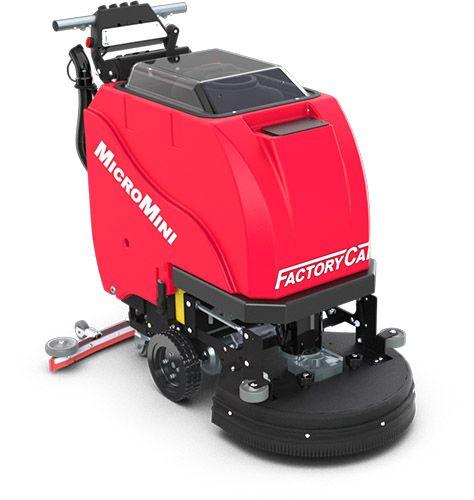
MicroMini
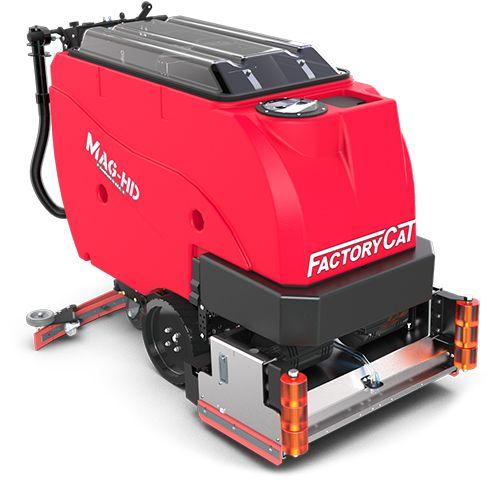
Mag-HD v2.2
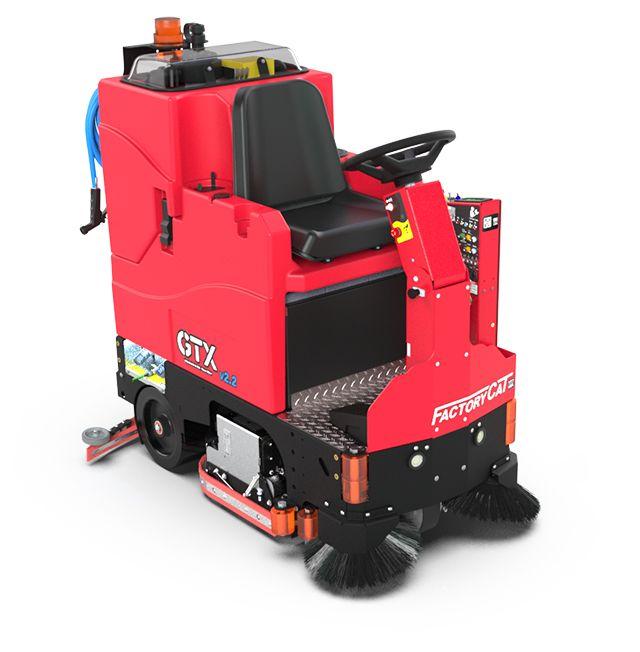
GTX v2.2
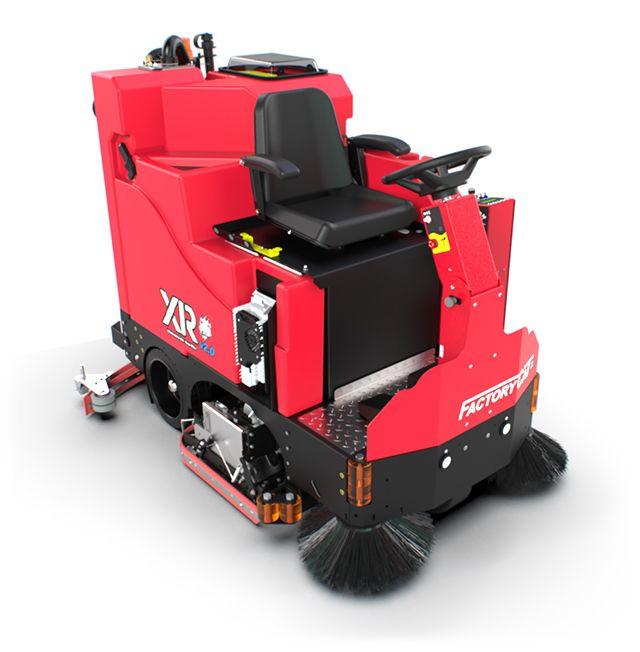
XR v2.0
Related Articles
Frequently Asked Questions
Can one scrubber run both pads and brushes?
Yes, if it has a disk deck, which every FactoryCat scrubber offers. Swap the brush for a pad driver and a pad. Cylindrical decks take brushes only, and orbital decks take pads.
What colour pad should I use on a finished floor every day?
In the common colour code, red is the usual daily pad, and white is for polishing. Colours vary by pad maker, so check the maker's grade. If red leaves soil behind, try blue on that spot. Blue starts to take finish off, so do not make it the daily pad.
What size pad or brush fits my scrubber?
It depends on your model and deck size. Some FactoryCat operator manuals list the brushes, pads and pad drivers for each deck, with part numbers. If yours does not, give your dealer the model and deck size.
What PSI should a pad or brush run at?
FactoryCat publishes no PSI figure. It gives brush down pressure in pounds, per machine, from up to 100 lbs on the MicroMini to up to 250 lbs on the XR. If you can set the pressure, use the lowest setting that cleans.