Sweeper vs scrubber vs sweeper-scrubber: which does your floor need?
Short answer
Choose by what is on your floor: a sweeper for dry debris, a scrubber for wet or stuck-on soil, a sweeper-scrubber only when you get both every day. FactoryCat builds no sweeper-scrubber with a built-in sweeper; its cylindrical-deck scrubbers sweep light debris while scrubbing. For heavy dry debris, the TR sweeper covers up to 59,406 sq ft per hour (practical rate, ISSA 2010 times), twice FactoryCat's largest scrubber.
What is on your floor: dry debris, wet soil, or both?
Start with the dirt, not the machine. Each of the three machines is built for a different kind of soil. Pick the wrong one and you end up cleaning the floor twice.
A sweeper handles dry debris. A spinning broom throws dust, grit, chips and scraps into a hopper, and a vacuum and filter hold the dust down. It uses no water, so the floor is dry and back in use straight away.
A scrubber handles wet or stuck-on soil. It lays down water, scrubs with a brush or pad, then a squeegee and vacuum pull the dirty water into a recovery tank. It washes the floor, but it is not built for a heavy load of loose debris.
A sweeper-scrubber tries to do both in one pass. The name covers two designs. One has a separate sweeping broom and hopper in front of the scrub deck. Sellers who split the names call that a sweeper-scrubber. The other is a scrubber whose cylindrical brushes pick up small debris as they scrub. They call that a scrubber-sweeper. FactoryCat builds only the second design.
When is a sweeper the right machine?
Pick a sweeper when most of your soil is dry and loose: sawdust, sand, metal chips, packaging scraps and dust. FactoryCat names saw mills, fabrication shops and foundries as sweeper settings. Those floors make a lot of debris, and most of it comes up dry.
FactoryCat makes two sweepers. The 34 is a walk-behind with a 34-inch cleaning path and a 2.0 cu ft hopper. It covers up to 17,647 sq ft per hour in practical use.
The TR is a rider with a 48-inch path, two 19-inch side brooms and a 4.2 cu ft hopper. It covers up to 59,406 sq ft per hour in practical use. Both sweepers run up to 5 hours on a charge, and both use a baghouse filter rated to 1 micron to catch dust as you sweep.
What a sweeper will not do is wash. Oil, spills, tire marks and dried-on grime stay on the floor after a sweep. If those matter to you, you need a scrubber as well.
When is a scrubber the right machine?
Pick a scrubber when the soil is wet, greasy or stuck on, and loose debris is light. FactoryCat writes about warehouses, car showrooms and food and beverage plants as scrubber settings.
Stuck-on soil needs weight on the brush. FactoryCat scrubbers press the brush down with up to 100 lbs on the MicroMini and up to 250 lbs on the XR. A sweeper broom only lifts what is already loose.
The smallest current FactoryCat scrubber is the MicroMini. It has 10-gallon tanks and covers up to 7,308 sq ft per hour in practical use. The largest is the XR. It has a 65-gallon solution tank and a 78-gallon recovery tank, and covers up to 29,374 sq ft per hour. Every scrubber uses water, so plan where you will fill and empty the tanks.
For smooth, finished floors with little loose debris, buy a scrubber alone. Dust-mop the floor first. FactoryCat says of its disk deck: "For flat, smooth, finished floors, a pad holder and disposable floor scrubber pads can be used." A sweeping system adds nothing here except more parts to maintain.
What does FactoryCat offer if your floor has both?
FactoryCat does not make a sweeper-scrubber with a built-in sweeper. Its answer is the cylindrical scrub deck. FactoryCat calls a scrubber with this deck "an ideal choice for environments that are extremely dirty and have small debris that would otherwise require pre-sweeping". Two of its published bullets read "Scrub & Sweep Simultaneously" and "Eliminates Pre-Sweeping".
FactoryCat answers the same question on its XR page: "The XR cylindrical deck industrial floor sweeper scrubber does both light sweeping and scrubbing simultaneously saving time and cleaning your floor better. Side brooms can be added to sweep a wider patch and recover debris that sits against the wall."
Note the words "light sweeping". That is the limit. The cylindrical brushes rotate at high speed and pick up small debris as they scrub. The same XR page says they sweep it "into a hopper that detaches to dump". FactoryCat publishes no size for that hopper. A dedicated sweeper is built for a bigger dry load, with a 2.0 to 4.2 cu ft hopper, side brooms and a 1-micron dust filter.
Six FactoryCat scrubbers take a cylindrical deck, with paths from 25 to 46 inches: the Micro-HD, Mini-HD, Mag-HD, GTX, GTR and XR. The Mag-HD walk-behind runs a 29 or 33-inch cylindrical deck and covers up to 15,784 sq ft per hour in practical use. The XR rider runs 40 or 46 inches and covers up to 29,374 sq ft per hour in practical use.
When is a sweeper-scrubber the wrong buy?
It is the wrong buy when you have a lot of dry debris. If the floor sees a steady load of sawdust, sand or metal chips, a sweeper does that job with no water, no tanks to dump and no wet floor. FactoryCat's rider sweeper also covers more ground. The TR sweeps up to 59,406 sq ft per hour in practical use. The largest FactoryCat scrubber, the XR, covers up to 29,374 sq ft per hour, about half that.
It is the wrong buy when your floor is smooth and finished. If there is little loose debris, a scrubber alone does the job. Brooms, a hopper and a dust filter on top are more to empty and maintain for no gain.
It is often the wrong buy when you need a daily sweep but only an occasional wash. Two machines can suit you better. The sweeper does the daily work, with no water. The scrubber comes out for the wet clean.
A combination machine makes sense on large floors where both kinds of soil show up every day, and doing both in one pass saves a second trip. FactoryCat's answer for that floor is a cylindrical deck. Light sweeping is enough when the debris is small and spread thin, such as grit, sand and small chips. It is not enough when debris piles up on the floor every shift. Then run a sweeper first and a scrubber after.
Side-by-Side Comparison
| Machine type | Sweeper | Scrubber | Sweeper-scrubber |
|---|---|---|---|
| Main job | Dry debris and dust | Wet or stuck-on soil | Both, in one pass |
| Loose debris | Yes, into a hopper | Light only, cylindrical deck | Yes |
| Uses water | No | Yes, 10–65 gal solution tank | Yes, solution tank |
| FactoryCat practical rate | Up to 17,647–59,406 sq ft/hr | Up to 7,308–29,374 sq ft/hr | Not made by FactoryCat |
| What you empty | Hopper, 2.0–4.2 cu ft | Recovery tank, 10–78 gal; hopper on XR cylindrical | Hopper and tanks |
| What you maintain | Brooms, dust filter | Brushes or pads, squeegee | Brooms, filter, brushes, squeegee |
| Typical setting | Saw mills, fabrication, foundries | Warehouses, showrooms, food plants | Large floors with both soils |
| FactoryCat machines | 34, TR | MicroMini to XR | None with a built-in sweeper |
Related Machines
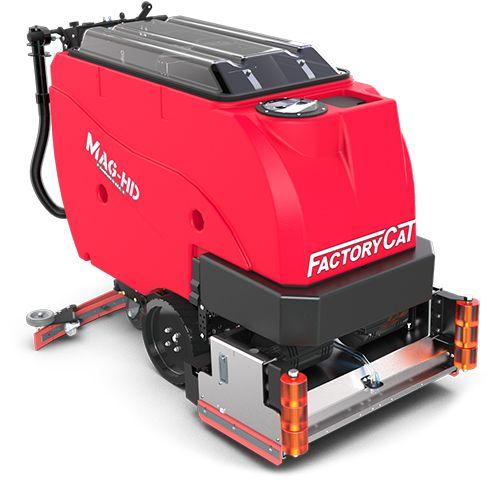
Mag-HD v2.2
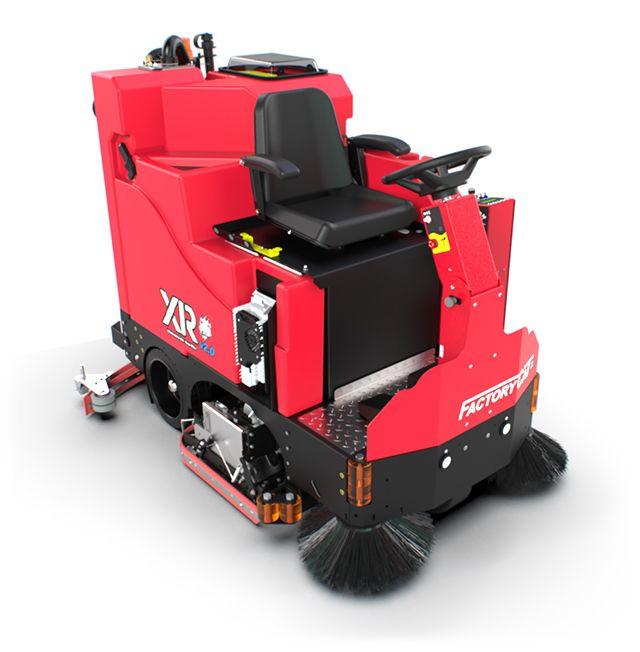
XR v2.0
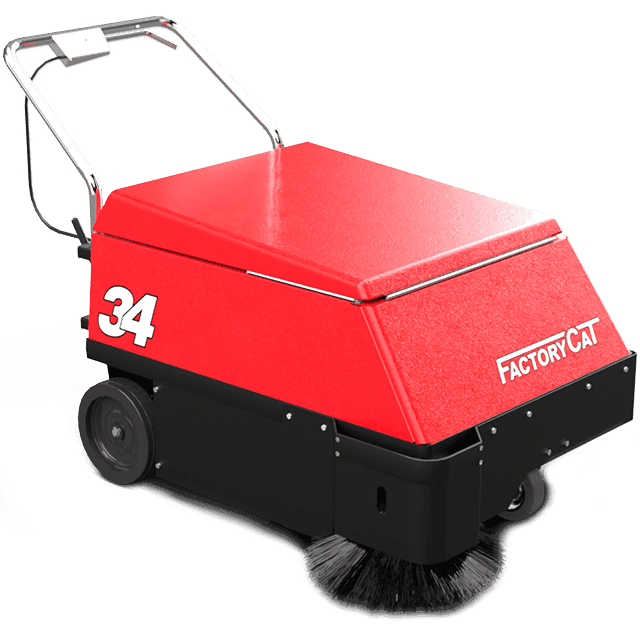
34
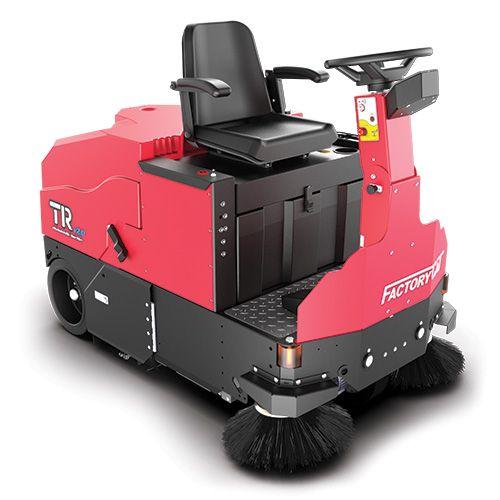
TR v2.0
Related Articles
Frequently Asked Questions
Can a floor scrubber pick up debris?
Some can. A FactoryCat scrubber with a cylindrical deck picks up small debris while it scrubs, which is why FactoryCat lists "Eliminates Pre-Sweeping" as one of its benefits. With a disk or orbital deck, sweep or dust-mop the floor first. On any machine, pick up large items by hand.
Does FactoryCat make a sweeper-scrubber?
Not one with a built-in sweeper. FactoryCat sells two sweepers, the 34 and the TR, and a range of scrubbers. For floors with both kinds of soil, it points to its cylindrical deck. On its XR page, FactoryCat says the XR with this deck "does both light sweeping and scrubbing simultaneously".
What is the difference between a sweeper-scrubber and a scrubber-sweeper?
The two names are often used for the same thing. Where sellers split them, a sweeper-scrubber has a separate sweeping broom and hopper ahead of the scrub deck. A scrubber-sweeper uses cylindrical scrub brushes that sweep up small debris as they scrub. FactoryCat's cylindrical-deck scrubbers are the second kind, though its XR page calls the XR a "sweeper scrubber".