How do you clean forklift tire marks off warehouse concrete?
Short answer
Scrub forklift tire marks off bare warehouse concrete with a floor scrubber, a grit brush, a detergent made for rubber marks and slow, overlapping passes. The marks are rubber smeared on by heat and friction, so a mop glides over them. Start with Light Grit, the mildest of FactoryCat's four grit grades, but on polished, sealed or coated concrete, start with a pad and test a small area first.
Why won't a mop remove forklift tire marks?
A forklift tire mark is not loose dirt. It is rubber. When a loaded forklift brakes hard, turns tight or spins a wheel, the tire scrubs against the floor. Heat and friction wear a thin layer of rubber off the tire and smear it onto the concrete.
That rubber carries dirt and oil with it, and it sticks to the surface. On bare concrete, it also works into the pores. So the marks are worst where forklifts brake and turn most: aisle ends, rack corners and dock doors.
A mop or a soft pad slides over the top of a mark. It takes the loose dirt and leaves the rubber. To lift the rubber, you need a detergent that loosens it, plus agitation: a stiffer brush, pressed down, often over more than one pass.
Is your warehouse concrete bare, sealed or coated?
Check this first, because it sets how hard you can scrub.
Bare concrete has no sealer or coating. It is hard and rough, so it can take tools that would ruin finished VCT, such as a grit brush. But it is porous. Oil, water and rubber soak in, and old marks can stain.
Sealed, polished or coated concrete, such as epoxy, is a finished floor. A grit brush can dull a polish or scratch a sealer or coating, so it needs the gentler setup below.
If you are not sure which you have, put a few drops of water on a clean, dry spot. If they soak in and darken the concrete, it is most likely bare. If they bead up, it is likely sealed or coated.
What else builds up on warehouse concrete?
Dust and loose debris come from pallets, packaging and the concrete itself. Scrubbed wet, they turn to slurry. Sweep first, or use a cylindrical deck, which FactoryCat builds for floors with "small debris that would otherwise require pre-sweeping". For a heavy dry load, FactoryCat's 34 and TR sweepers, with 34 and 48-inch paths, do the dry work first. The sweeper vs scrubber guide covers that choice.
Oil and hydraulic fluid drip from forklifts and soak into bare concrete fast, so treat spots early, before they stain.
Dock areas get grit, sand and water from trucks and weather. Go slower there, so the squeegee picks the water back up.
The main lanes also get traffic film: a thin, grey layer of dust, oil and rubber. A routine scrub with a fibre brush and a general detergent clears it.
Which deck and brush work on warehouse concrete?
Pick the cylindrical deck if the floor also carries small loose debris, which it picks up as it scrubs. FactoryCat names it for "concrete floors, grouted tile, and many other flat durable surfaces". It takes brushes only and comes on six FactoryCat scrubbers. Pick the disk deck if the slab is uneven, since its gimbaled mount lets the brush follow the dips, or if you want Super Grit or pads. It comes on every FactoryCat scrubber.
On bare concrete, a fibre brush such as nylon or polypropylene handles daily traffic film. For tire marks, start with Light Grit (grey, medium). If marks stay, move up one grade at a time: Midi Grit (blue, rough), then Tough Grit (black, very rough). Super Grit (orange, extreme rough) is the roughest, and it fits the disk deck only, as does polypropylene. Stop at the first grade that works.
FactoryCat's brush colours are a separate scheme from pad colours. Even two black brushes differ: Tough Grit is very rough, while polypropylene is medium to light. Go by the name and the grade.
On sealed, polished or coated concrete, the rubber sits on the surface instead of soaking in, so it usually needs less force. Use a gentle pad, red in the common colour code, on the disk deck's red tufted pad driver, or a nylon brush (white, light to soft), with a cleaner the floor or coating maker approves. If a mark stays, try a blue pad on that spot only. Move to grit only if the floor or coating maker allows it.
What is the step-by-step recipe for tire marks?
First, pick up large items by hand. Then sweep or dust-mop, unless you run a cylindrical deck and the debris is small. Second, treat oil and hydraulic spots with a degreaser, as the chemical maker directs.
Third, fit the brush grade you chose. Fill the tank with a detergent made for rubber marks and oily soil, mixed as its maker directs. Set enough solution flow to keep the brush wet, since bare concrete soaks up more than a sealed floor. Flow runs from 0 to 0.7 gallons per minute (GPM) on the GTX and GTR, and 0 to 1.0 GPM on the Mag-HD and XR.
Fourth, double scrub heavy marks. If your model lets you scrub with the squeegee up and the vacuum off, make a first pass that way, so the solution stays down and loosens the rubber. Do not let it dry. Then scrub it again with the squeegee down and the vacuum on. Overlap each pass a little, and slow down over heavy marks. If marks remain once it dries, make one more pass before you step up a grit grade.
To keep marks from building up, scrub the busy lanes on a routine schedule, since fresh marks lift more easily than old, stained ones. Fewer hard stops, tight turns and wheel spins put less rubber down. Non-marking forklift tires are made to leave lighter marks, so ask your forklift supplier about them.
Which FactoryCat scrubber fits warehouse aisles?
FactoryCat's full-line brochure says large distribution centers "need maximum scrub path, tank capacities and run time, but in a footprint that allows for easy u-turns and cleaning close to racking." It also says its heavy duty products can "withstand the expected collisions". Wider paths mean fewer passes, and bigger tanks and longer run times mean fewer stops.
The XR has the widest FactoryCat scrub paths, a 45-inch disk or 46-inch cylindrical deck, with a 65-gallon solution tank and up to 5 hours of run time. The GTR runs up to 36 inches on disk or 37 on cylindrical, with a 46-gallon solution tank and up to 5 hours.
The GTX runs up to 34 inches on disk or 33 on cylindrical, with a 33-gallon solution tank and up to 4.5 hours of run time. For tire marks on bare concrete, run its disk or cylindrical deck with a grit brush; its orbital deck takes pads, which suit sealed or coated floors. For a smaller warehouse, the Mag-HD walk-behind runs up to 34 inches on disk or 33 on cylindrical, with a 35-gallon solution tank and up to 5 hours.
In practical use, they cover up to 15,784 sq ft per hour (Mag-HD), 21,661 (GTX), 23,627 (GTR) and 29,374 (XR), based on ISSA 2010 cleaning times.
No turning radius is published for any FactoryCat scrubber. Published widths are 31 inches for the Mag-HD in its smallest build, 34 for the GTX, 37 for the GTR and 43 for the XR, and they may not include the deck or squeegee. So ask for the widest point, measure your narrowest aisle, and ask for a demo in your own aisles, on your worst marks.
Side-by-Side Comparison
| Soil type | What it is | What works | Watch out for |
|---|---|---|---|
| Forklift tire marks | Rubber stuck on by heat and friction | Grit brush, detergent, slow double scrub | Scratching sealed or coated floors |
| General traffic film | Thin layer of dust, oil and rubber | Routine scrub with a fibre brush | Letting it build up between scrubs |
| Dust and loose debris | Pallet, packaging and concrete dust | Sweep first, or a cylindrical deck | Scrubbing it into slurry |
| Oil and hydraulic spots | Drips that soak into bare concrete | Degreaser on the spot, then scrub | Leaving it until it stains |
| Dock-area grit and water | Sand, grit and rain from trucks | Sweep, then scrub slowly with full pickup | Water left on the floor |
| Spills | Product or fluid from stock or machines | Pick up promptly; degreaser if oily | Spreading it down the aisle |
Related Machines
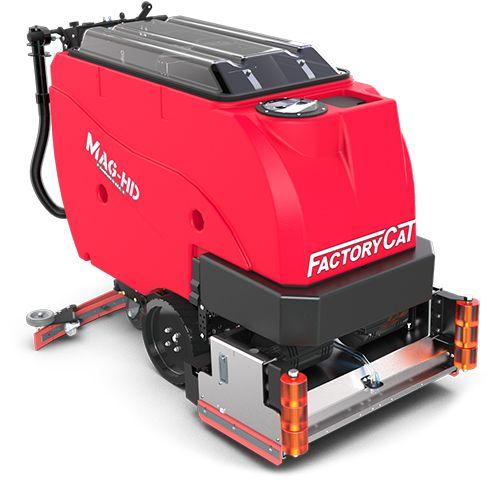
Mag-HD v2.2
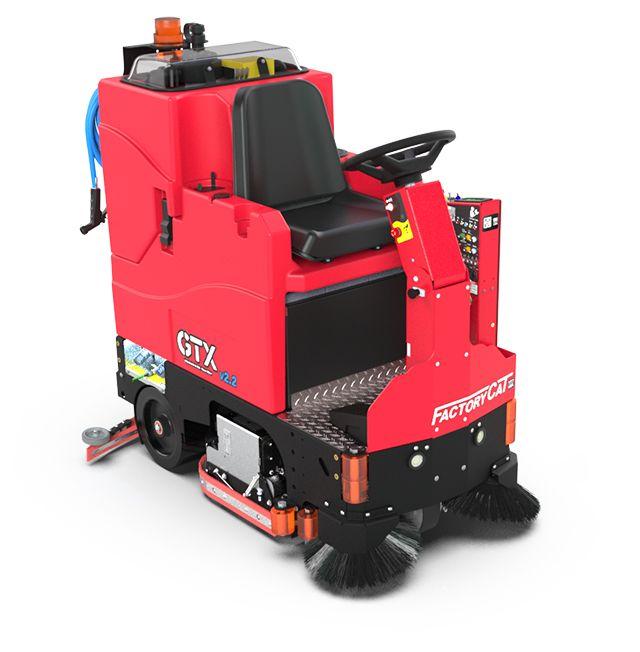
GTX v2.2
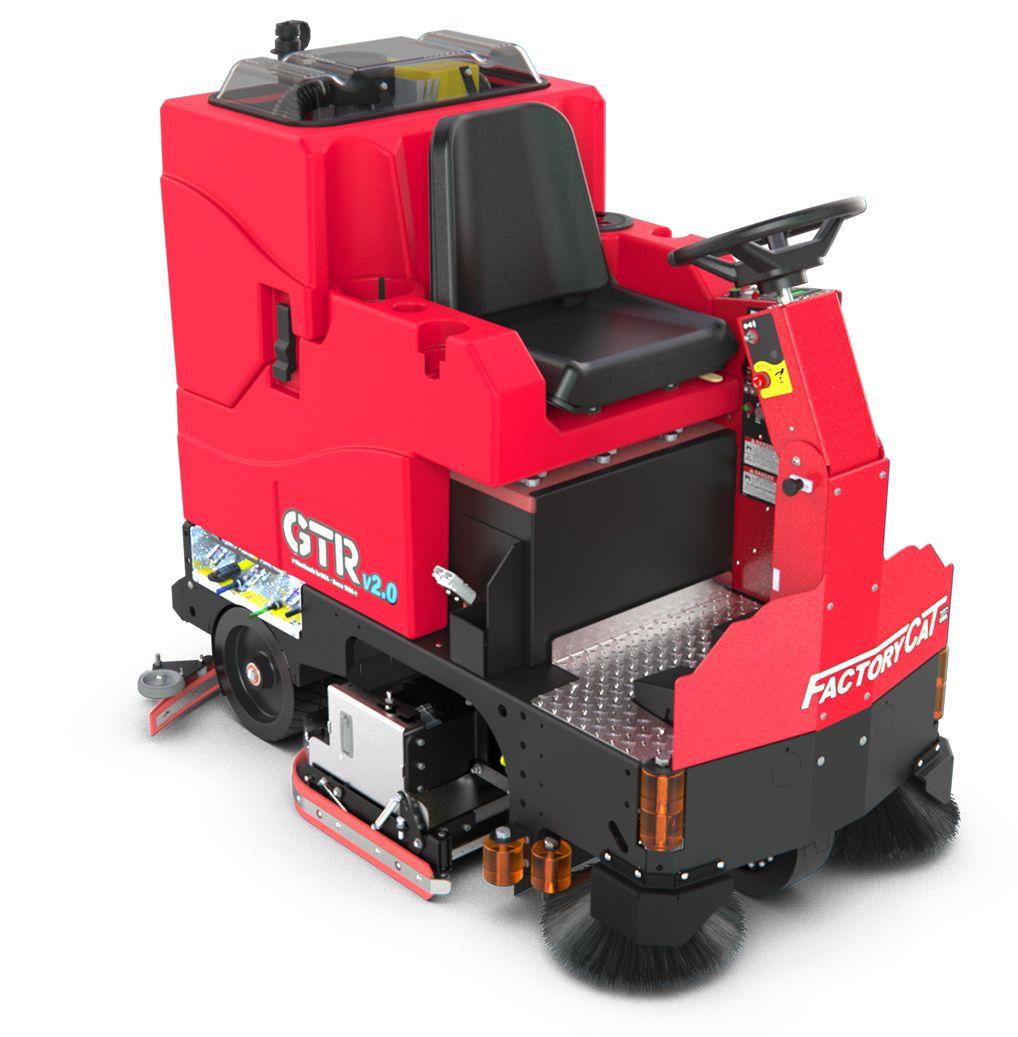
GTR v2.1
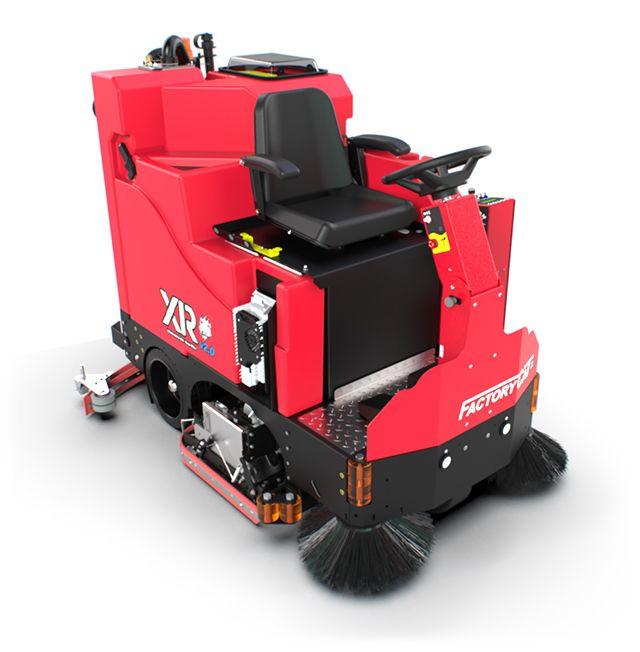
XR v2.0
Related Articles
Frequently Asked Questions
Will a floor scrubber remove forklift tire marks?
Yes, on most concrete, with the right setup. On bare concrete, use a grit brush, a detergent made for the job and slow, overlapping passes. Old marks that have stained bare concrete may fade rather than fully lift.
Can I use a grit brush on sealed or epoxy-coated concrete?
Only if the coating maker allows it. Grit can dull a polish or scratch a sealer or coating. Start with a red pad or a nylon brush, and test a small area first.
Do I need to sweep before I scrub a warehouse floor?
With a disk or orbital deck, yes. The cylindrical deck picks up small debris as it scrubs, and FactoryCat lists "Eliminates Pre-Sweeping" as a benefit. For a heavy load of dry debris, run a sweeper such as FactoryCat's 34 or TR first.
What PSI should I use on warehouse concrete?
FactoryCat publishes no PSI figure. It gives brush down pressure in pounds: up to 185 lbs on the Mag-HD, 200 on the GTX, 225 on the GTR and 250 on the XR. If your model lets you set down pressure, start low.